
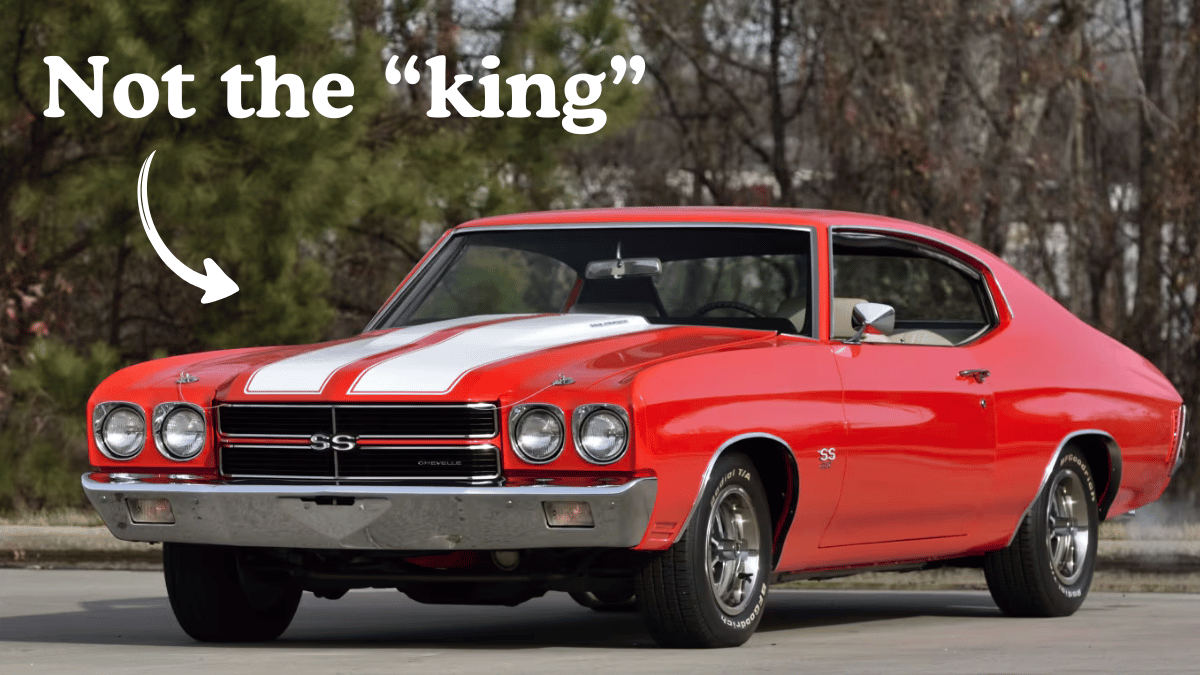
Unpopular Opinion: The ’70 Chevelle LS6 Isn’t the King of Muscle Cars (And Here’s Why)
Everyone says the ’70 Chevelle LS6 is the greatest muscle car ever built. Walk through any car show, scroll any classic car forum, and you’ll hear the same reverent declaration: 450 horsepower, 500 lb-ft of torque, big-block brutality in a gorgeous A-body shell. The LS6 is gospel. Questioning it is automotive heresy.
Good. Let’s commit some heresy.
The ’70 Chevelle LS6 is an extraordinary machine. But “extraordinary” and “greatest of all time” are not the same thing. When you actually dig into the numbers, the production history, the engineering philosophy, and the real-world performance data, the LS6’s crown starts to slip. There are at least three cars from the same era that have a stronger, more defensible claim to muscle car royalty. The LS6 built its legend on displacement and marketing as much as outright dominance, and it’s time someone said it out loud.
Give the Devil Its Due
Before the pitchforks come out, let’s be honest about what the LS6 actually is: a legitimate monster. The 454 cubic-inch big-block in LS6 trim came with solid lifters, an aggressive 112-degree lobe separation camshaft, rectangular port heads flowing serious air, and an 11.25:1 compression ratio. Those factory ratings of 450 horsepower and 500 lb-ft of torque weren’t entirely fiction. The car ran consistent high-13-second quarter miles in period testing, with the likes of Car and Driver and Motor Trend recording passes in the 13.7 to 13.8-second range at around 104 mph. That was fast for a production car in 1970.
The Chevelle also had presence. It looked like it could eat you. And it sold. GM moved roughly 4,475 LS6-equipped Chevelles in 1970, making it visible and culturally dominant in a way that ultra-limited cars never could be. Collectors know the name. Casual fans know the name. That’s not nothing.
But here’s where the story gets complicated.
The Case Against the Crown
Those Factory Numbers Are Gross, Not Net
The 450-horsepower rating on the LS6 is a SAE gross figure, measured without accessories, with open exhaust headers, and under ideal test conditions. When you install the engine in a real car with a full exhaust system, air cleaner, alternator, power steering pump, and all the other parasitic drag of actual street equipment, the net output drops considerably. GM’s own internal estimates placed net output significantly lower than the gross rating, likely in the 380 to 400 horsepower range under real-world conditions.
This wasn’t unique to GM, every manufacturer used gross ratings in this era, but it matters enormously when you’re using those sticker numbers to crown a king. The LS6 made headlines with 450 horsepower. It delivered something more modest. That gap is part of why period testers and modern restorers who’ve put LS6 engines on a chassis dyno often walk away scratching their heads at the disconnect between legend and reality.
Displacement Is Doing Heavy Lifting Here
The LS6’s biggest advantage is also its most intellectually lazy one: it is an enormous engine. At 454 cubic inches, it has more displacement than almost anything else in the segment. Raw cubic inches are the bluntest instrument in performance engineering. They produce torque easily and make headline numbers look good, but they don’t tell you how efficiently an engine converts displacement into power, and they don’t tell you anything about how a car actually performs once weight enters the equation.
The ’70 Chevelle LS6 in coupe form weighed approximately 3,800 pounds. That’s not a lightweight car. When you calculate power-to-weight, you get roughly 8.4 pounds per horsepower using the gross rating, and significantly worse using the real net output. Compare that to the 1969 Camaro ZL1, which put a lighter, more powerful-per-cubic-inch engine into a car weighing around 3,300 pounds, and suddenly the Chevelle’s raw torque doesn’t look quite so dominant.
The 1969 ZL1 Camaro Is in a Different Class
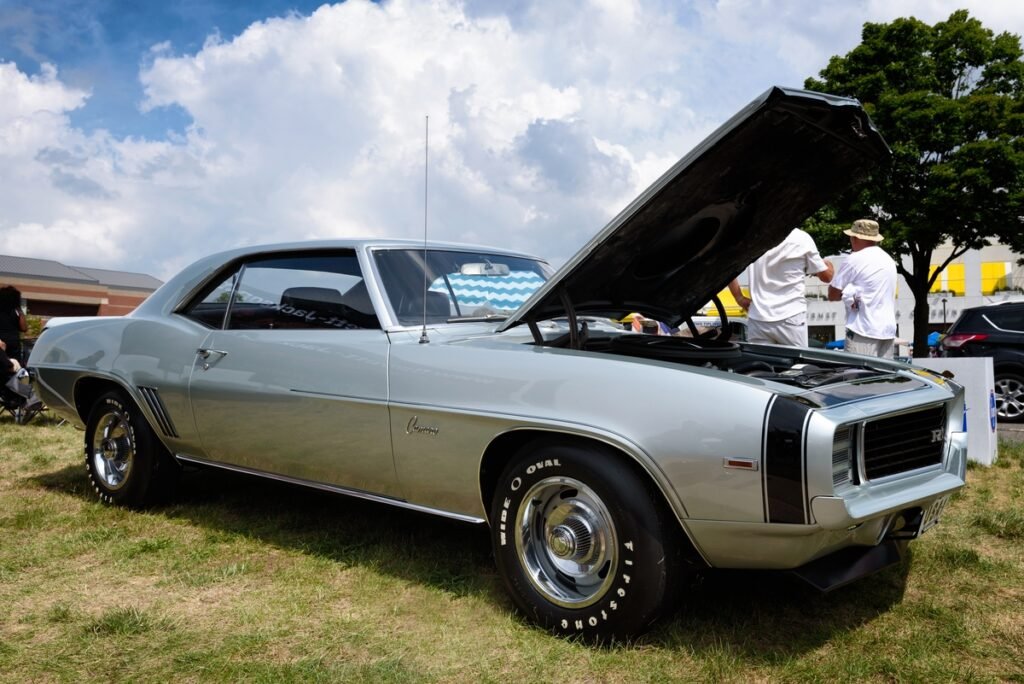
Here’s the car that genuinely deserves the crown, and it makes the LS6 look like it was engineered for brochures. The COPO 9560 ZL1 Camaro came from the factory with an all-aluminum 427 cubic-inch V8, the same basic architecture that powered Can-Am and endurance racing machines. Only approximately 69 units were built. Sixty-nine. The LS6 had 4,475 units; the ZL1 had 69.
The ZL1 427 was conservatively factory-rated at 430 horsepower, but period testers and engineers consistently reported real-world output well in excess of 500 horsepower. The aluminum block alone saved over 100 pounds compared to a cast-iron equivalent. In a Camaro shell already lighter than the Chevelle, that power-to-weight advantage was decisive. Period quarter-mile testing by Hot Rod magazine put the ZL1 at 13.16 seconds at 110.21 mph, and that was with street tires and a full exhaust system. That is faster than any documented production LS6 test from the era, and it was achieved with a more sophisticated, race-derived engine philosophy rather than brute displacement.
The ZL1 wasn’t built to sell. It was built because a handful of GM engineers and performance-minded dealers found a loophole in GM’s ban on factory-sponsored racing. It’s a factory hot rod with race DNA baked into the block itself. That’s a different category of machine than a high-displacement street engine in a big car.
The Hemi ‘Cuda Makes the Displacement Argument Irrelevant
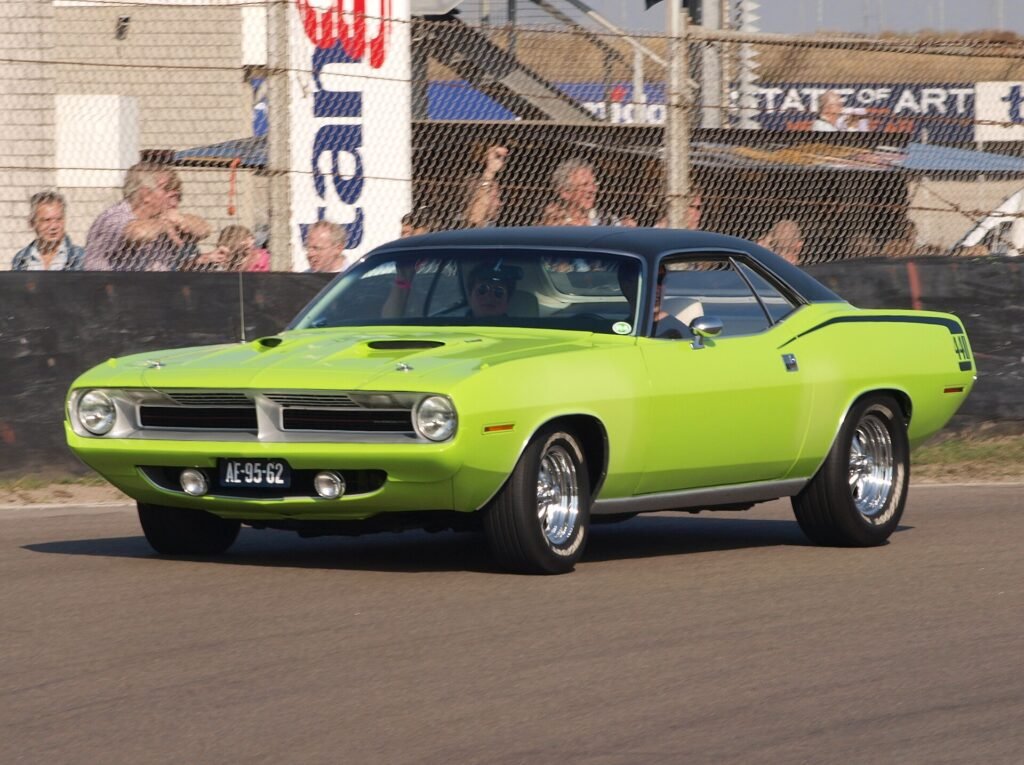
If the ZL1 is the engineering argument against the LS6, the 1970 Plymouth 426 Hemi ‘Cuda is the pedigree argument. The 426 Hemi’s roots go back to NASCAR and the 1964 drag racing wars. It was banned from NASCAR, it was so dominant. The street version carried a conservative 425-horsepower gross rating with 490 lb-ft of torque, but the Hemi’s heritage and actual on-track performance told a different story than the factory figures.
Fewer than 670 Hemi ‘Cudas were produced for 1970. With the four-speed manual gearbox, you’re looking at around 284 units. The ‘Cuda’s compact E-body platform paired Hemi power with a shorter, tighter chassis, giving it a handling dynamic and power-to-weight profile the long, heavy Chevelle simply couldn’t match. Period quarter-mile tests regularly landed in the 13.5-second range at over 105 mph, and purpose-built race versions of the same car ran deep into the 10s straight from the dealer.
The Hemi also had something the LS6 didn’t: a factory racing program that proved its performance wasn’t theoretical. Richard Petty’s 1964 Hemi won everything until NASCAR banned it. The 426 street Hemi carried that lineage directly into production cars. The LS6 was built to intimidate in a parking lot. The Hemi was built because racing made it necessary.
The Buick GSX Stage 1 Outperformed the LS6 in Real-World Testing
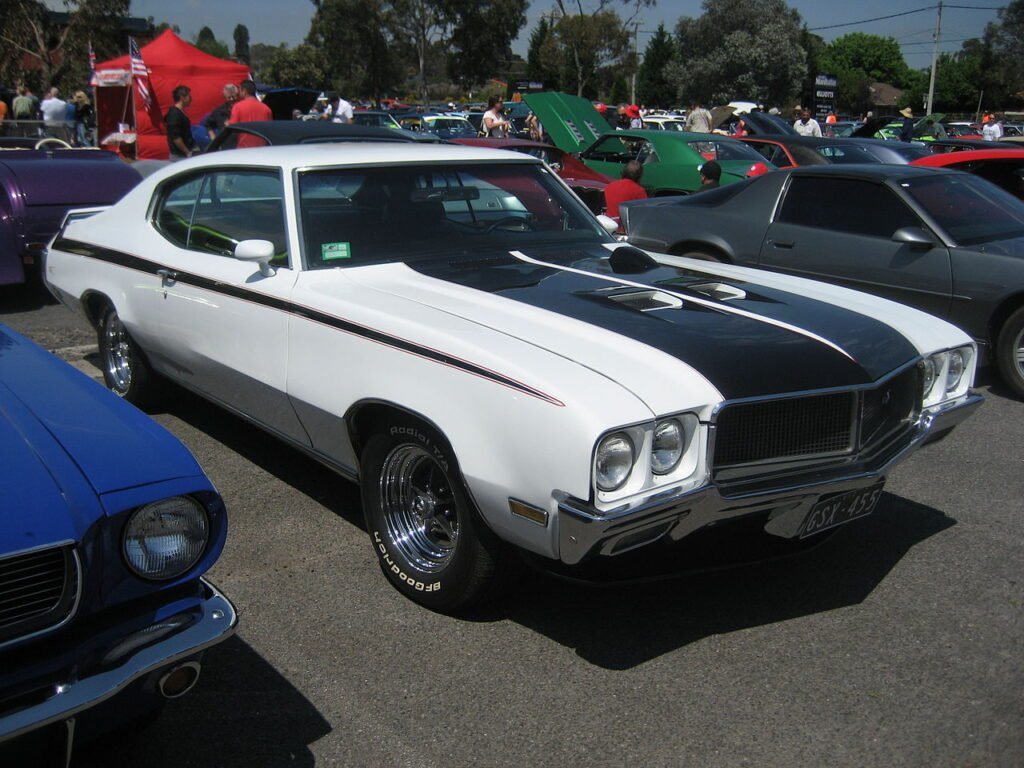

This one stings, because nobody talks about the Buick GSX as the greatest muscle car. But they should. The 1970 GSX Stage 1 packed a 455 cubic-inch engine tuned specifically for street usability, making a factory-rated 360 horsepower and 510 lb-ft of torque. That torque figure beats the LS6 on paper, and real-world testing backed it up.
Car and Driver‘s 1970 comparison test is the one to cite here: the GSX Stage 1 ran the quarter mile in 13.38 seconds at 105.5 mph. That’s faster than the tested LS6 Chevelles from the same period. The GSX also came with a more refined suspension setup, functional hood scoops, and a chassis tuned for balance rather than straight-line drama. It was the complete package. Only 678 GSX Stage 1s were built for 1970, making it rarer than the LS6 and, by the metrics that actually matter, quicker.
So Who Actually Deserves the Crown?
The 1969 Camaro ZL1 is the king. Full stop. It combines genuine race-derived engineering with documented performance numbers that exceed the LS6, wrapped in a rarity that makes matching-numbers examples among the most coveted cars in collector history. The ZL1 wasn’t compromise. It was factory-sanctioned extremism. An all-aluminum racing engine in a street car, built in a run of 69 units, that ran quarter miles in the 13.1-second range on pump gas and street rubber.
The Hemi ‘Cuda is the co-regent, the car that proves you can have racing pedigree and street credibility in the same package, with production numbers so small they make the ZL1 look common by comparison.
The Pushback, and Why It Falls Short
LS6 defenders will point to that 450-horsepower rating and say nothing else touches it. We’ve already addressed why that number is a product of gross-rating methodology rather than real-world output. They’ll say the Chevelle is a more complete car, more comfortable, more usable, easier to live with. That’s true, and completely beside the point. “Most livable” and “greatest” are different arguments. A king isn’t crowned for being pleasant to commute in.
The popularity argument is the most seductive: the LS6 shaped culture, moved the needle, made the whole era mean something. That’s fair. The LS6 was the muscle car most Americans knew about, and cultural dominance is real. But popularity has never been the right metric for greatness in performance cars. More people have heard of the Ford Mustang than the Shelby GT500KR, and nobody argues the base Mustang is the better machine.
The LS6 earned its fame. It just didn’t earn the crown.
The Verdict
The ’70 Chevelle LS6 is one of the five greatest muscle cars ever built. It belongs in any serious conversation about the era. The engine is violent, the car is beautiful, and the legacy is real. But greatness in layers doesn’t equal supremacy, and the LS6 wins the popularity contest more than it wins the performance argument.
When you stack documented quarter-mile times, power-to-weight ratios, engineering intent, production rarity, and racing pedigree side by side, the 1969 Camaro ZL1 comes out on top. It was built by people who found a backdoor into factory racing, stuffed an aluminum race engine into a production car, and did it 69 times. That’s not a muscle car. That’s a factory prototype with license plates.
The LS6 is the king of muscle car mythology. The ZL1 is the king of muscle cars. There’s a difference, and now you can’t unsee it.