Article 2 Explained: U.S. Constitution vs. Uniform Commercial Code (UCC)
Table of Contents
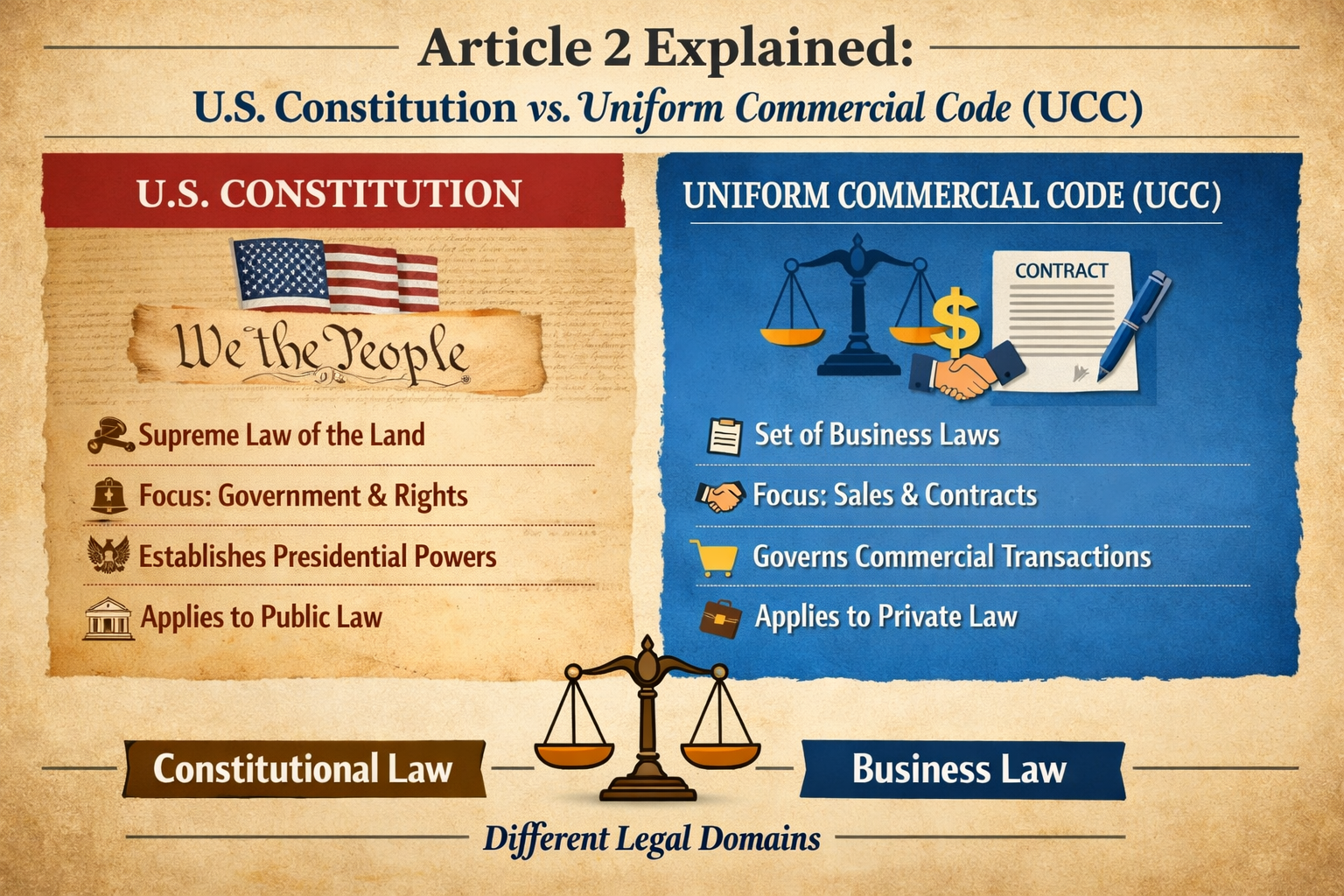
When people mention “Article 2,” they’re almost always talking about one of two foundational legal texts: Article II of the United States Constitution, which sets up the presidency, or Article 2 of the Uniform Commercial Code (UCC), which governs the sale of goods across most of the country. Both play huge roles in everyday life, even if they deal with completely different worlds.
The Executive Branch Under the U.S. Constitution
Article II of the U.S. Constitution is the section that creates the executive branch of the federal government. It outlines who can run for president, how the president gets elected through the Electoral College, and what powers the office actually holds.
Compared to Article I, which lays out Congress’s powers in meticulous detail, Article II is surprisingly brief. The framers wrote that the “executive Power shall be vested in a President of the United States of America.” That short phrase has sparked debates for well over two centuries because it leaves plenty of room for interpretation about where presidential power begins and ends.
Beyond that broad statement, Article II spells out a handful of specific roles:
- Commander in Chief: Puts the military under civilian control.
- Treaties and appointments: Gives the president power to negotiate treaties and name judges, ambassadors, and department heads—though the Senate has to sign off.
- Pardons: Grants the power to pardon federal offenses, except in cases of impeachment.
- The “Take Care” clause: Instructs the president to make sure federal laws are faithfully carried out.
The article also covers impeachment. It establishes that a president, vice president, or civil officer can be removed from office for conviction of treason, bribery, or “other high Crimes and Misdemeanors.”
Article 2 in Commercial Law: The UCC
If you’re in business or studying contract law, “Article 2” means something totally different. Here, it refers to the second article of the Uniform Commercial Code, which standardizes commercial transactions across states.
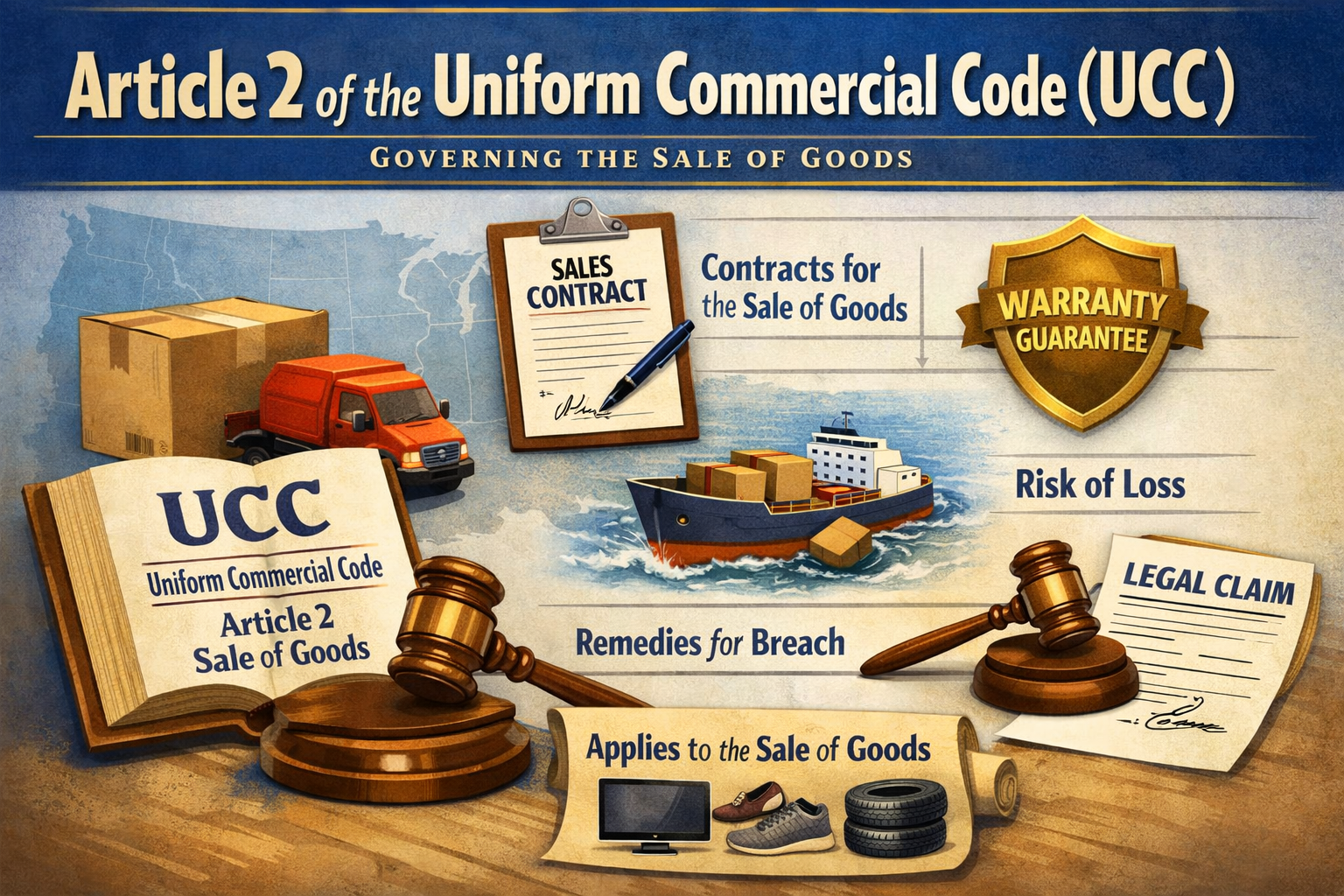
Article 2 specifically applies to contracts involving the sale of physical goods—things you can touch and move, from a fleet of delivery trucks to a wholesale order of coffee beans. It doesn’t cover real estate transactions, services, or employment agreements, which stick to traditional common law rules.
What makes Article 2 practical is its flexibility. Traditional contract law often demanded strict, mirror-image agreement between offers and acceptances. If a small detail differed, there was technically no deal. Article 2 relaxed those old standards to reflect how modern commerce actually works. If two parties act like they have an agreement, exchange purchase orders, and ship goods, the law generally recognizes that a valid contract exists, filling in reasonable gaps like delivery times or standard warranties.
Why Context Matters
Because the term shows up in treaties, constitutions, and international agreements worldwide, context tells you everything. In human rights law, Article 2 of the European Convention on Human Rights protects the right to life. In international defense, Article 2 of the North Atlantic Treaty commits NATO members to peaceful economic collaboration.
Still, if you’re in the United States, hearing someone bring up Article 2 almost always points back to either the limits of White House authority or the mechanics of a business sale. Knowing which one is on the table makes all the difference.